

Extended Producer Responsibility (EPR): A CPG/Food Guide to State Packaging Laws and Compliance
Extended Producer Responsibility, more commonly called EPR, has become one of the most frequent discussion topics across our peer groups over the past several months. The confusion is understandable. The policy is moving quickly, the rules vary by state, and many manufacturers are still working to figure out where their company sits on the compliance timeline. The short answer for most food and CPG manufacturers is that EPR is no longer a future regulatory concept. It is an operational program with real fees, real reporting obligations, and real penalties for non-compliance.
What Is Extended Producer Responsibility (EPR)?
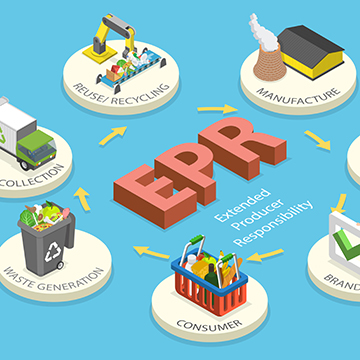
EPR is an environmental policy that holds manufacturers financially responsible for the full life cycle of their packaging. That responsibility includes collection, recycling, and final disposal. Rather than leaving end-of-life packaging costs to municipal waste systems and consumers, EPR shifts those costs back to the producers who put the packaging into the market. The model has been operating in parts of Europe and Canada for years, and it has now arrived in earnest in the United States.
EPR Packaging Laws by State: Where Compliance Is Active Today
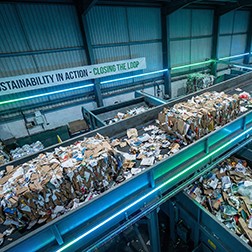
Seven states have enacted EPR laws covering packaging: California, Colorado, Oregon, Maine, Maryland, Minnesota, and Washington. Each state sets its own scope, fee schedule, and reporting timeline, but the structural pieces are remarkably consistent across jurisdictions.
Oregon and Colorado have already issued fee invoices to producers. California is expected to follow by early 2027. The remaining four states are at varying stages of program development, with reporting deadlines and fee structures becoming more defined throughout 2026 and 2027.
Several additional states are considering legislation, including New Jersey, New York, and Rhode Island. The geographic footprint will continue to expand, and any company selling packaged goods nationally should plan for a patchwork of state-level obligations.
Circular Action Alliance: The Producer Responsibility Organization for EPR Compliance
The central compliance organization is a Producer Responsibility Organization, or PRO, called Circular Action Alliance (CAA). CAA has been appointed as the designated PRO in all seven states, which is fortunate because it creates a single registration and reporting hub rather than seven separate ones. Their producer resource center is the most useful starting point for any manufacturer trying to understand its specific obligations.
Registration, data submission, and fee payments all flow through CAA. Fee structures are typically tied to the type of packaging material and the volume sold into each state, so reporting accuracy matters more than most companies initially realize.
EPR Reporting and the State-Level Data Challenge
One of the most common questions members raise is around data visibility. Most manufacturers do not have perfect insight into which units of packaging end up in which state. Distribution moves through retailers, wholesalers, and third-party logistics providers, and tracking the final destination by state is rarely a clean exercise.
There is a workable approach. According to guidance from EcoEnclose, manufacturers can estimate state-level distribution by using state population as a proxy, allocating total volume sold based on each state’s share of the national population. The method is not perfect, but it has been deemed admissible for reporting in the absence of better data. For companies just beginning to build their compliance process, this is a reasonable starting point that gets a defensible number on paper while better tracking systems are developed.
EPR Penalties, Deadlines, and Compliance Timelines
Non-compliance penalties in several of these states are aggressive. Some states tie penalties to per-unit sales, which means financial exposure can scale quickly for a national manufacturer. Understanding obligations early is significantly less expensive than catching up after a deadline has passed.
If a company sells packaged goods into any of the seven states with active EPR laws, it almost certainly has compliance obligations either now or in the near future. The first step is determining whether the company qualifies as a covered producer under each state’s definition, which generally turns on revenue thresholds and whether the company is the brand owner, importer, or first distributor.
What Drive Wheel Members Are Doing on EPR Compliance
Across the groups, members are at various stages of EPR readiness. Some are well into reporting cycles with established internal processes and dedicated owners. Others are just beginning to map their packaging footprint and assign accountability inside the organization. There is no single right pace, because each company’s exposure depends on its product mix, geographic distribution, and revenue profile.
This is a topic I will continue to track across the groups, and as members develop strategies and best practices, I will make sure those insights get shared in upcoming meetings and member updates.

Resources for EPR Compliance and Implementation
For members who want to go deeper, here are the resources I have found most useful:
- Circular Action Alliance Producer Resource Center: registration hub and program details for all seven states
- Mayer Brown EPR Overview: legal analysis of the move from concept to compliance
- Hogan Lovells State-by-State Breakdown: detailed comparison of program elements across states
- RSM Compliance Guide for Middle-Market CPG: practical guide oriented to mid-sized companies
- Baking Business on Food Manufacturers and EPR: industry coverage of how snack and food manufacturers are responding
- EcoEnclose EPR FAQ: practical guidance on data estimation, including the state population approach referenced above

Engaging Discussions Enable Confident Decisions®
When you’re busy with the daily demands of your job, it’s easy to overlook the opportunities that will drive long-term growth. When you become a member of a Drive Wheel peer group, you can identify new strategies, reduce risk, and make confident decisions that will grow your business faster and more strategically.
We host two-day in-person meetings twice a year where leaders discuss their new strategies, innovation plans, and business challenges to get feedback from their peers. Members leave the meeting knowing they have thought about their idea from every angle. Between meetings, we conduct benchmarking studies and weekly news roundups to keep our members informed about changes in the industry.