

Groceryshop 2026: The Regional Grocer Is Becoming a Warehouse, and Instacart, DoorDash, and AI Shopping Agents Are Becoming the Retailer
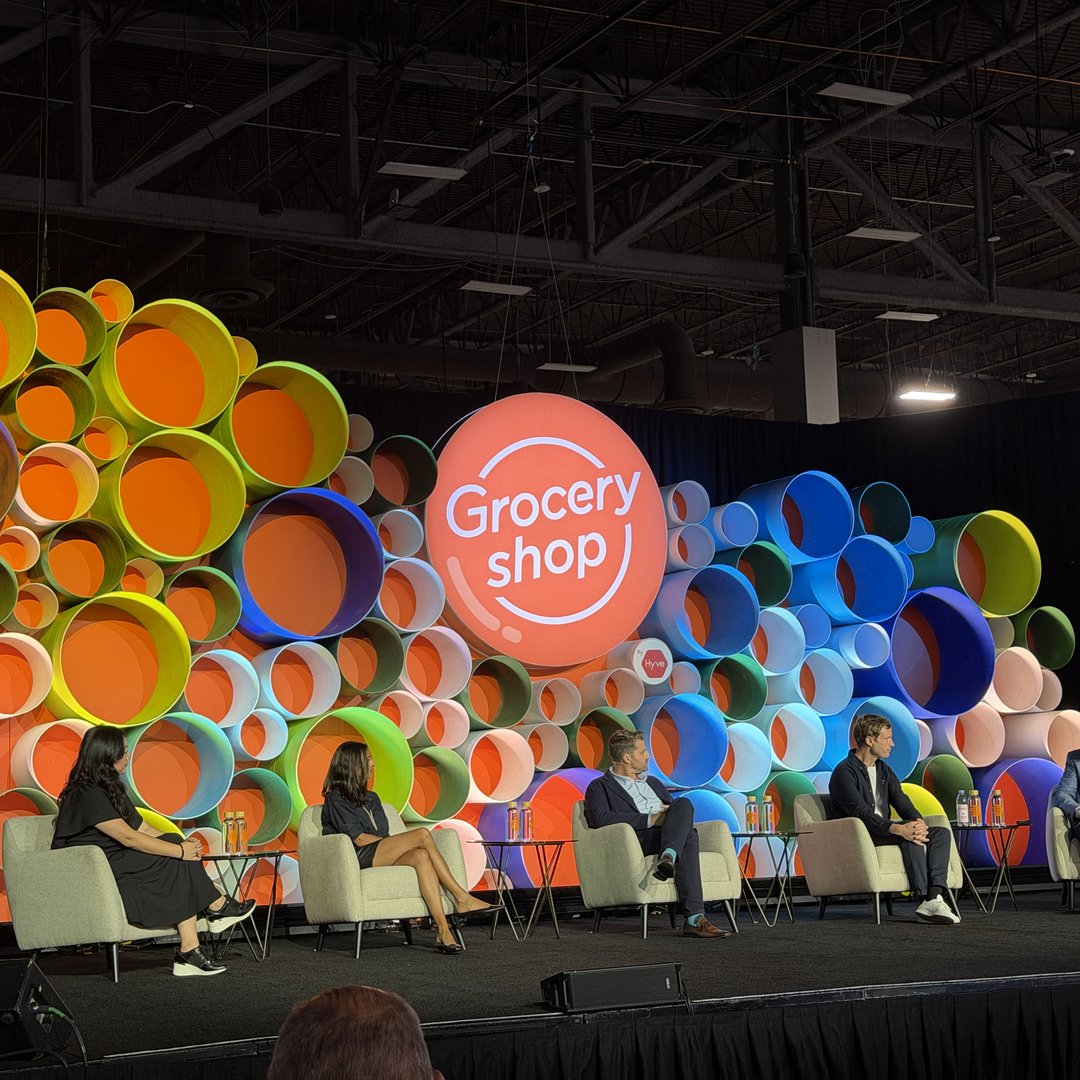
Groceryshop is the grocery industry’s technology show: three days in Las Vegas every September where retailers, the platforms that serve them, and the vendors selling to both put their strategies on a stage. I enjoy attending the show every year. Last year’s post argued that a shakeout had begun, because too many grocers had built websites, apps, and advertising networks that could not pay for themselves. This year the show answered the question that post left open: who will survive the shakeout? The grocers big enough to build their own technology, Walmart, Kroger, Target, and Ahold Delhaize among them, and the two platforms, Instacart and DoorDash, that everyone else now rents it from.
The show itself was the first piece of evidence. The organizer’s own attendance count dropped by about a fifth, the show lost a day, and the regional grocers who two years ago were on this floor selling their new media networks to anyone with a badge did not come. The retail media companies that remained were the ones that can still afford to be in grocery technology: Amazon, Walmart, Target, Instacart, and Ahold Delhaize.
Here is why a manufacturer should care. Think about what happens when a shopper chooses a brand over the store brand. For a hundred years that choice was made in an aisle the grocer controlled, and a manufacturer’s whole commercial model is built to influence it: the line review, the trade calendar, the category plan, all aimed at the grocery buyer who sets the shelf. At a regional grocer, that choice is leaving the aisle. The shopper now makes it on a website Instacart built, under an ad Instacart sold, and increasingly on the advice of an AI assistant that Instacart or DoorDash runs. The biggest grocers built their own platforms and kept the choice inside their walls. The regional grocers rented, and the choice went with the rental. They still own the building and the produce section; the decision about what goes in the cart is being made somewhere else. The rest of this post follows that decision: why the regional grocer let it go, what went with it, who is choosing now, and what a national brand or a private label supplier does about a customer who decides less of the cart each year.
Legacy Grocers Ran Out of Time, So They Rented
Regional grocers’ technology was never built to compete. It was built to keep up. The website came from a vendor, fulfillment ran on store labor, and the loyalty program mostly printed coupons. That was survivable for twenty years, because the competition was other grocers doing the same thing.
AI is a step change, and a step change does not care how far behind a company was. It gets laid on top of the data and the systems a company already has, which means the grocer who never built the foundation cannot build it now. Kroger has spent a decade and petabytes of data building its foundation, and its chief digital officer, Yael Cosset, still told the main stage that the average retailer’s data is not good enough to run AI on. If the leader is still working on the foundation, the regional grocer that never started is not catching up. The show’s own head of content, a former Forrester analyst, explained why the gap keeps widening. The average US food retailer keeps about two cents of net profit on every dollar of sales. The companies telling grocers to “fail fast,” Amazon and the technology platforms among them, can afford an experiment that does not work. A grocer at two cents cannot, so it does not try, and it falls further behind every year it waits.
A grocer that cannot build has two choices: fall behind, or rent the whole stack from someone who built it. Instacart has spent fifteen years building exactly that stack, and its pitch to grocers is now the full thing: the website, the app, the picking in the store, the ads on the site, the smart carts, the catering orders, and, as of two weeks before the show, the AI shopping assistant. Instacart CEO Chris Rogers called it “an operating system for grocery” in his keynote, and 380 grocery websites now run on it. Sprouts runs on all of it, and Instacart says most of Sprouts’ online growth is Instacart’s doing.
Manufacturer moves: Sort each retail customer by whether it owns its technology or rents it, and by which company sells its media. That distinction will explain more about the next three years with an account than square footage will.

The Ads Went First, Then the Shelf
Advertising went first. Carrot Ads is Instacart’s white-label advertising platform: the grocer’s website carries the grocer’s name, but the sponsored products on it are sold and served by Instacart, and Instacart writes the grocer a check for its share. More than three hundred grocer sites now run it, a number that roughly tripled over eighteen months and has not moved since February. The land grab is over. Every regional grocer that was going to rent has rented, and every figure Instacart’s CEO cited on stage had already appeared in the company’s quarterly reports to investors months earlier. There was nothing new to announce.
That is how a regional grocer’s retail media network ends. Hy-Vee launched its own network from this stage in 2023. Two years later, Instacart was serving the sponsored products on Hy-Vee’s site. Hy-Vee kept the network’s name and its president, and it was not on the floor this year. These networks do not close with a press release. They close with a white label. A year ago I predicted the long tail of grocer ad networks would wind down; what I did not predict is that it would look like growth for Instacart. Instacart’s CEO gave away the economics a year ago, when he said a retailer told him the advertising check Instacart writes is now bigger than the software fee the retailer pays Instacart. The platform is paying the grocer to stay.
The shelf is going the same way. DoorDash’s co-founder said its drivers photograph a million grocery shelves a day, and DoorDash announced a product at the show, Brand Center, to sell that data to CPGs: when an item goes out of stock, and whether a competitor picks up the sale. The day before, Instacart launched software that turns the physical shelf into a digital view in real time. Instacart’s CEO reassured the audience that every Instacart order ships from a retailer’s store: “If you grow, we grow.” Read it the other way. The grocer grows by stocking shelves for someone else’s customer. The store is still there, the trucks still arrive, the produce is still fresh. But the relationship with the shopper, and the data that describes it, have moved out of the building.
Manufacturer moves: When a grocer signs on to a platform, item data, in-stock position, and ad placement move with it. Instacart’s catalog is now the shelf for 380 storefronts at once, so fix product content there first. That applies to private label items too; the retailer’s own products sit in the same catalog, and the retailer is often not the one maintaining them. And get access to the platform’s out-of-stock data, because the retailer’s category manager will be looking at the same screen.

The Money Follows the Customer
Retail media was supposed to fix the two-cent margin. The model is simple: a retailer sells advertising on its own website and app to the brands it already carries, at close to pure margin, and uses the money to fund an e-commerce operation that cannot fund itself. Every grocer with a website built one.
For two companies it worked. Amazon and Walmart will take about 89% of the new retail media dollars spent this year, according to EMARKETER. Instacart and DoorDash take most of what is left. Every other network in the country, every grocer and drug chain and dollar store combined, splits the remainder, and EMARKETER expects each of their shares to be flat or down through 2027. The people running those networks know it. In EMARKETER’s survey of retail media leaders, only three in ten believe the revenue they bring in is new money rather than trade dollars the brand was already going to spend.
While the revenue concentrated, the cost side got worse. Delivery is now nearly two-thirds of online grocery orders, up from about half two years ago, and delivery is the most expensive way to fill an order. McKinsey partner Angus McOuat put it plainly: “the margin is leaking out of the channel through delivery, through these partnerships.” Fewer than half of grocers make money on e-commerce.
Look at who sits on both sides. The same companies that take the ad dollars meant to fund the grocer’s website also run the delivery that makes the website unprofitable. A year ago I wrote that subscale e-commerce would go margin-negative without a subsidy. It did, and the subsidy turned out to be the white label.
Manufacturer moves (branded): Pick the handful of networks where incrementality can be measured and fund those. The retailer’s own media team is asking the same question about its numbers that a CFO is asking about the brand’s.

The Agent Is Already Choosing
An AI shopping agent builds the basket from a request, “a week of high-protein dinners under $80,” instead of waiting for the shopper to search item by item. Is there anything consumers do more often and enjoy less than grocery shopping? It is weekly, it is confusing, and it takes forty minutes online. That is exactly why shoppers will hand it to a machine before they hand over anything else, and it is why Instacart’s CEO said grocery will be the retail category most transformed by AI.
This is not a forecast. The results are the platforms’ own numbers, on their own users, but they all point the same way. DoorDash’s AI-built grocery baskets are 50% larger than the ones people build themselves and contain 60% more items the shopper had never bought before. Walmart told investors in February that half of its app users have already used Sparky, its assistant, and their baskets run about a third bigger. At Misfits Market, six in ten carts are filled by the algorithm and never touched. Kroger’s chief digital officer expected that shoppers who state exactly what they want would buy less; the opposite happened. A year ago I predicted agents would move from recommending products to buying them. They have, and the basket got bigger when they did.
Two things about these agents matter for manufacturers. First, they run on Walmart, Instacart, and DoorDash. The bigger basket still rings up at a store, but the data on what went into it, and the choice itself, stay with whoever runs the agent. Second, the agent is taking over choices the shopper used to make in the aisle, starting with brand or store brand. DoorDash built “swap for cheaper” into its assistant as a feature. A year ago I predicted price comparison would commoditize undifferentiated items. The platforms built it in.
On a marketplace like DoorDash, the agent can also choose the store. It checks which nearby stores have the items in stock, and whether they take the shopper’s SNAP card, and builds the cart there. On a single grocer’s white-labeled site, the cart stays with that banner. The direction is the same either way: the platform increasingly picks the store, and the agent increasingly picks the item. For each item, it needs a reason it can state back to the shopper. The open question is how much of that reasoning will be for sale, since the same companies run the ads and the agent, and Instacart has already said ads are coming inside its assistant by the end of the year.
Manufacturer moves: The agent does not search by SKU. It solves a problem: a birthday party, a week of high-protein dinners, a SNAP-eligible cart from the nearest Aldi. Describe products by the problems they solve, or the agent will find someone who did.

Private Label Is Eating the Category's Marketing Budget
A grocer that has rented its storefront, its ads, and its assistant still owns two things outright: the store and its own brand. The label earns margin in every channel, and retailers of every size are leaning on it hard. Hy-Vee’s CEO described funding a penny-for-penny price match on fifteen thousand items with more than a thousand new private label items a year, and store brands are now growing about three times faster than national brands. For a grocer losing the customer relationship to a platform, own brand is its strongest remaining reason for a shopper, or an agent, to choose its shelf, as long as the label stands for something beyond price.
It also creates a funding problem that most suppliers have felt without seeing the mechanism. Every brand sales leader has lived this meeting: the retailer’s own brand is taking share in the category, and the retailer is asking the brand for more money. Those two facts are connected, and the connection runs through how trade money works. Promotions, allowances, and shopper marketing are the largest marketing line a brand has, and nearly all of it is set as a percentage of the brand’s sales at that retailer. Store brands are not marketed that way. Sam’s Club’s 1984 criteria for a good item, still in use, literally asks whether the package can sell itself, and Circana finds national brands sell about six points more of their units on promotion than store brands do.
So as own brand takes share, the brand trade pool shrinks, and fewer dollars promote the category. The retailer either asks the remaining brands to fill the gap or funds promotion from its own margin. Retail media takes the same hit, because the retailer’s own label does not buy ads. The McKinsey partner said the quiet part on stage: “If they’re trying to grow own brand penetration, they’re not getting the dollars from the media.” Each retailer is working through this trade-off on its own terms, but the arithmetic is the same everywhere.
Manufacturer moves: Branded: expect to be asked for more, and price the ask against real incrementality. The retailer is choosing between trade dollars and its own brand’s margin, and a supplier should know which it picked before the line review. Private label: the share is coming to you, and so is the question of who pays to promote it. Know how each retailer plans to fund category promotion before the next cost conversation, because that question is coming to the table one way or another.

What This Means for Brands: Two Buyers
A national brand now has to win two buyers. The retailer still controls the shelf, and it is asking for more trade money while its own label grows. The agent increasingly controls the cart, and it needs a reason to choose the brand over a store brand that costs about a quarter less. That reason has to be one it can repeat to a shopper who asked for the cheaper option.
If the brand cannot say in one sentence what it is for and who it is for, the agent cannot either, and it moves on. A brand that tries to be everything to everyone reads to a machine as relevant to no one. The retailers on stage proved the rule from the other direction. One regional grocer’s CEO said his people are his biggest asset, which is the same sentence four or five regional grocers have said from that stage. If everyone’s point of difference is their people, nobody has one. Sam’s Club’s chief merchant said his in five words, “curated items at disruptive prices,” and every product and store decision in the keynote followed from it. A national brand on the value panel spent its time redefining value to fit a premium portfolio instead of owning that it is the premium choice. That is precisely the brand an agent will not be able to justify. A brand that cannot state its value sharply enough to advertise it cannot be chosen by a shopper, and now it cannot be chosen by an agent.
The sentence reaches the agent through ordinary channels: product titles, attributes, claims, and reviews. A brand that knows what it stands for writes those consistently. One that does not leaves the agent to assemble a reason from scraps, and the store brand’s lower price is the easiest reason to find.
Manufacturer moves (branded): Write the sentence. Not the mission statement, the one line an assistant would say to a shopper to explain why the item is in the cart instead of the store brand. If the line does not exist, that is a product problem, not an AI problem.

More Media Is Not the Answer
Every brand has felt this: the same media budget reaches fewer of the brand’s shoppers each year. Demand has not gone anywhere. The path to it has split across social, search, AI assistants, creators, and retailer sites, and at each step the shopper can be lost to an out-of-stock, a wrong price, or a thin product page. The instinctive response is to buy more media to cover the gap.
Digital Commerce Global benchmarked US manufacturers’ online sales growth from 2022 to 2026 and sorted the companies by how they responded. Those who bought more media grew online at exactly the category rate. Those who built capability instead, meaning product content, availability, and an organization that can act on its own data, grew at nearly twice the category rate. Those who did neither are growing their online sales at roughly zero and are projected to shrink. Media masks the problem for a year and creates a bigger one after, because the category itself is slowing, and growing with it is a slow way to lose share. The gap between the leaders and everyone else was not in tools. It was in ways of working, cross-functional collaboration, and whether the leadership team understood the channel at all.
Manufacturer moves (branded): Before the next retail media increase, ask what capability it is covering for. If the answer is content, availability, or an organization that cannot act on its own data, spend the increase there.
What This Means for Private Label Suppliers
For a private label manufacturer selling to the long tail, the customer is the party losing power, and that cuts two ways.
The label is the last thing a long-tail grocer fully owns, which makes its supplier more important to that grocer than it has ever been. But the agent exposes a weakness. DoorDash’s “swap for cheaper” treats the store brand as the fallback, not the choice, and a store brand that is only a lower price has nothing else for the agent to say about it. Product content is part of the same problem: the retailer’s own items sit in the same Instacart catalog as everyone else’s, and nobody at the retailer may be maintaining them.
Sam’s Club shows a store brand can carry a real point of view. The supplier who helps a retailer build that point of view, and keeps its product content clean on the platforms, is doing work a co-packer is never asked to do. That is where the strategic relationship gets built, and it is a relationship a co-packer does not have.
Walmart and Amazon are the exception to most of this. They own the agent, the media network, and private label programs at enormous scale, and they gain power as the long tail rents. For suppliers to those two, the customer is getting stronger, and the negotiation gets harder for a different reason: the retailer controls every step from the search to the cart to the store brand placed beside the item.
Manufacturer moves (private label): Help write the sentence for the retailer’s brand; a supplier who does gets invited into strategy conversations. Own the product content for your items on the platforms, because the retailer probably does not. And for Walmart and Amazon business, map where an item can lose the sale: search ranking, the agent’s swap suggestion, and the store brand placed beside it. Each is a lever the retailer controls and a supplier can negotiate.

Where This Goes
Instacart was founded as a delivery company and did it well. This year it called itself a grocery technology company and meant it. A billion and a half baskets and two billion catalog items are a training set, and ten million in-store signals a day are the feed. Delivery is still the service. The data is the business, and it is being rented back to the same grocers who generated it, as their storefront, their ads, and now their assistant.
That is the future of grocery I came home with. Walmart, Amazon, and Kroger built their own platforms and will keep the decision inside their walls. For the regional grocer, the store becomes a fulfillment node with a produce section, and Instacart and DoorDash become the retailer. Either way, a manufacturer’s only leverage, branded or private label, is to be unmistakable, in a sentence a machine can read and repeat to a shopper who asked for the cheaper one.

The Manufacturer Playbook (Next 90 Days)
Sort each retail customer by whether it owns its technology or rents it, and by which company sells its media. The answer tells a supplier where trade and media dollars are going next year.
Audit product content where the agent shops. Instacart’s, DoorDash’s, and Walmart’s catalogs are the shelf now, for branded and private label items alike. Descriptions, attributes, and language that matches the problems shoppers bring to an agent decide whether an item makes the basket.
Write the sentence (branded). For each top item, the one line an agent would use to justify it over the store brand. If it does not exist, that is the first project.
Help write the retailer’s sentence (private label). The store brand needs a reason an agent can state too, and the supplier who helps write it earns a place in strategy conversations a co-packer never gets.
Engaging Discussions Enable Confident Decisions®
When you’re busy with the daily demands of your job, it’s easy to overlook the opportunities that will drive long-term growth. When you become a member of a Drive Wheel peer group, you can identify new strategies, reduce risk, and make confident decisions that will grow your business faster and more strategically.
We host two-day in-person meetings twice a year where leaders discuss their new strategies, innovation plans, and business challenges to get feedback from their peers. Members leave the meeting knowing they have thought about their idea from every angle. Between meetings, we conduct benchmarking studies and weekly news roundups to keep our members informed about changes in the industry.