

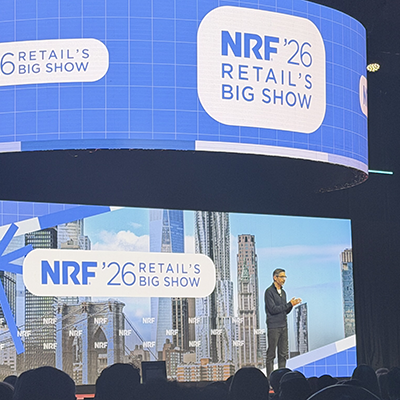
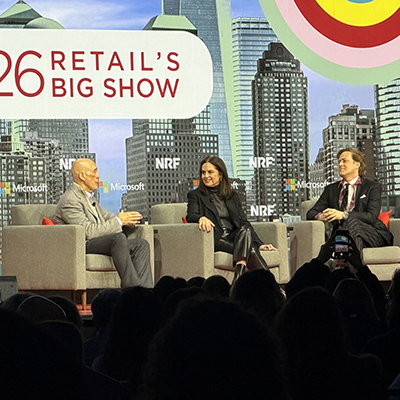
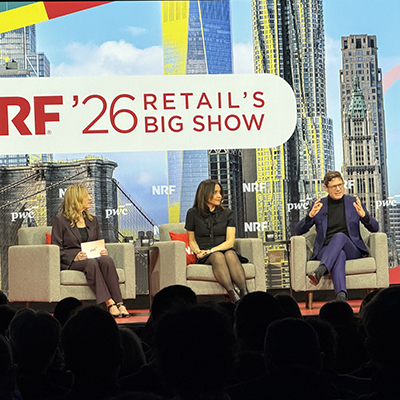
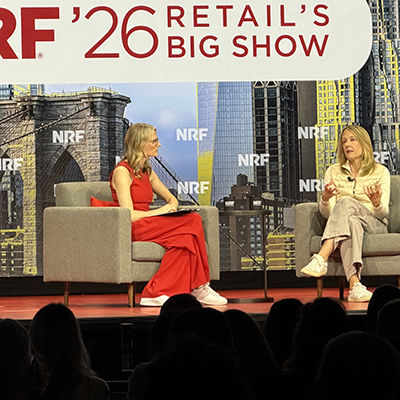



Agentic shopping isn’t a future state. It is live today, embedded in Google search, and most consumers are already using it without realizing it.
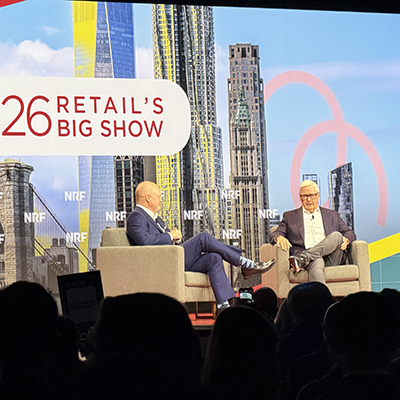
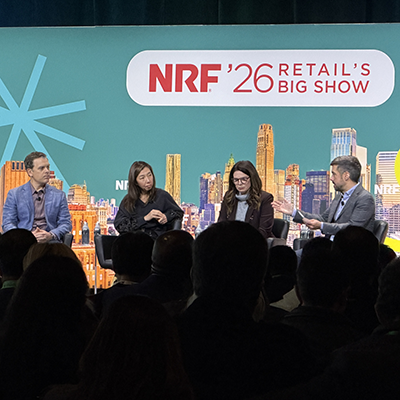
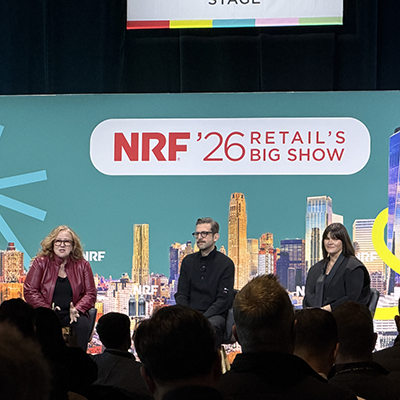
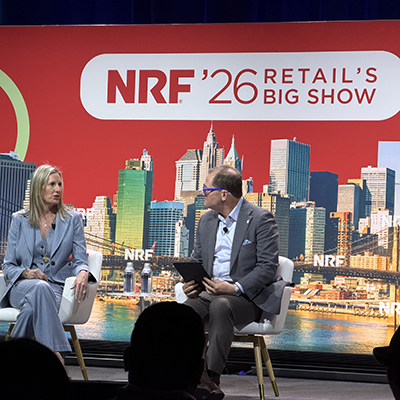
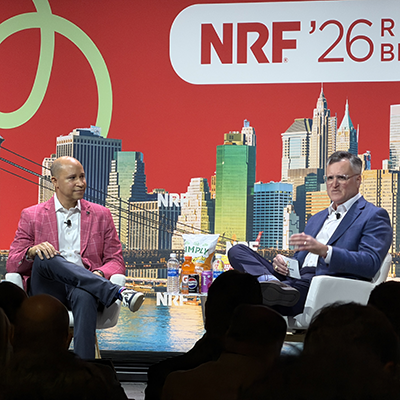
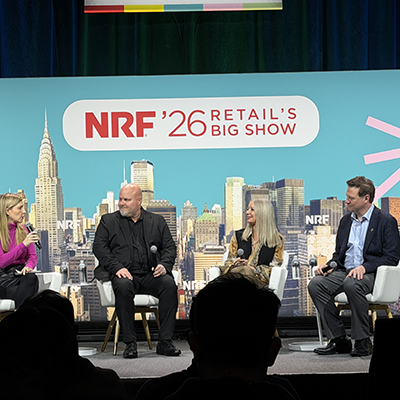
What was seen as forward-looking prediction at Groceryshop 2025 is arriving faster than expected. NRF 2026 made clear that the infrastructure for AI-driven commerce is being built now, and the companies integrating fastest are setting the rules the rest will follow.
Google announced its Universal Protocol for agentic commerce, a global standard that allows AI agents to connect directly with any merchant’s systems. That means any agent—Gemini, Copilot, or any compliant platform—can now:
We’re already seeing this in practice.
Walmart announced full Gemini integration, sharing catalog and location-level inventory data with hourly refreshes. As a result, shoppers no longer need to visit Walmart.com to browse or buy, any Google query can now surface Walmart’s assortment, confirm availability at the nearest fulfillment node, and directly handle checkout.
Ralph Lauren showed what this looks like at the product level with Ask Ralph, an AI assistant that handles natural requests like, “I need an outfit for an outdoor wedding in Boston this weekend.” The system factors in weather, seasonality, inventory across locations, past purchases, and shipping windows to recommend options that will arrive on time. For new customers, a few quick visual comparisons dial in their style in no time, and the result feels less like search and more like a knowledgeable personal shopper.
Many shoppers say they enjoy grocery shopping, which is partially true. Shoppers enjoy browsing, finding new products, and getting inspired to cook something different, yet they’re less enthusiastic about time spent running in for milk, eggs, and frozen dinners.
Agentic AI is on track to absorb these basic and stock-up trips first since shoppers can hand their lists to Gemini, have it optimize basket composition and price across retailers, and schedule delivery around their calendar. Walmart’s early investment means it’s already positioned to win these trips at scale.
Implication: When agents decide where to shop, which brands to select, and which items are available, lower-funnel marketing loses leverage. Point-of-sale matters less when decisions are made upstream, and retailers without price leadership or defensible uniqueness may be skipped entirely.
A common response to this pressure is experiential retail. Dick’s Sporting Goods highlighted its House of Sport concept, with gyms, climbing walls, and batting cages built into stores. Lululemon is adding yoga studios and coffee shops. Gymshark is opening physical locations with built-in fitness experiences.
The logic that experiences create reasons to visit is clear, but the risk is that these retailers now compete against pure plays. Why choose a gym inside a sporting goods store when the real gym is next door? Why get coffee at Lululemon when Starbucks is on every corner? Filling excess square footage with experiences sounds strategic, but competing with businesses fully built on that experience is a difficult fight to win.
Implication: Grocery faces a similar tension. The more physical grocery stores emphasize inspiration and gathering, the more they compete with restaurants. Grocery stores are unlikely to out-restaurant the restaurants already serving those needs in their market, leaving brands with more responsibility to earn consideration before the trip.
The contrast at NRF was hard to miss. Wayfair and Home Depot spent their time explaining why agentic AI would not work for discovery since shoppers enjoy browsing, need help with complex projects, and have lingering trust issues from early chatbot interfaces.
Meanwhile, Walmart’s full integration with Google shows it’s betting that agentic shopping will mature through use rather than debate. The difference in posture shows who is shaping the future and who is reacting to it.
That shift changes the data calculus too. Data hoarding that once functioned as a competitive moat becomes a liability in an agent-driven environment. If data isn’t shared with AI platforms, agents cannot find, recommend, or sell product. Platforms will scrape what they can, but participating intentionally is how brands retain influence over how they show up.
Microsoft made the product-level challenge explicit. Most product pages simply aren’t built for machines. Descriptions are thin, attributes are incomplete or inconsistent, storytelling lives separately from transactional data, related items that enable substitution or upsell aren’t linked, and brands that want to win in agentic commerce need to fix this now.
Pepsi shared the most counterintuitive lesson of the conference: when implementing AI, don’t add it to existing processes. Start over.
Rather than optimizing current workflows, they partnered with AWS and Siemens to build digital twins of their manufacturing operations and tested entirely new configurations. Belt placement, QA positioning, approval routing. Everything was on the table, and within two months, they achieved a 20% operational improvement.
The lesson extends beyond manufacturing. AI bolted onto legacy processes produces incremental gains, while AI used to reimagine the process delivers transformation.
Get product data agent-ready. Audit product pages for structured data, complete attributes, machine-readable formatting, and connected content. If an agent can’t parse your page, it can’t evaluate or sell your products.
Engage in platform integrations. Brands that feed data to AI shopping platforms now will train those systems on their terms. Waiting means letting competitors define how the category gets represented.
Identify stockup SKUs. Know which products are vulnerable to agent-driven substitution based on price and availability. Defend them with velocity, distribution, and data quality, or plan intentionally for volume shift.
Rethink process before adding AI. Automating current state delivers incremental gains. The bigger opportunity comes from asking what the process would look like if it were designed for AI from the start.
Watch the pure plays. Experiential retail isn’t a guaranteed safe harbor. If retail partners are filling space with experiences, pressure test whether those experiences can win against dedicated competitors and what that means for your brand’s role within them.
Our peer groups help manufacturers navigate exactly these shifts. When the landscape moves this fast, the advantage goes to leaders who can stress test strategy with peers facing the same decisions. If you want to pressure test your agent readiness with other food and CPG executives, we will get you in the right room.
When you’re busy with the daily demands of your job, it’s easy to overlook the opportunities that will drive long-term growth. When you become a member of a Drive Wheel peer group, you can identify new strategies, reduce risk, and make confident decisions that will grow your business faster and more strategically.
We host two-day in-person meetings twice a year where leaders discuss their new strategies, innovation plans, and business challenges to get feedback from their peers. Members leave the meeting knowing they have thought about their idea from every angle. Between meetings, we conduct benchmarking studies and weekly news roundups to keep our members informed about changes in the industry.
Fancy Food 2026 – Concept to Shelf Just Got a Lot Shorter: A New Ecosystem for Getting New Products to Market Walking the Summer Fancy

Summer Speaker Series: Retailers are putting new technology to work across the path to shelf, from autonomous freight to digital shelf tags. For this series,

Foodservice Looks Like It’s Still in Value Mode. The 2026 Restaurant Show Showed That’s Only Half the Story. Walking the 2026 National Restaurant Show floor
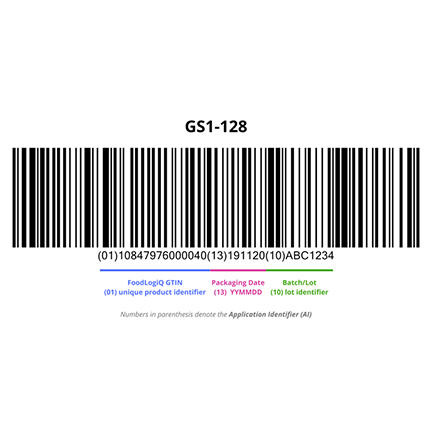
A CPG manufacturer’s guide to GS1 Sunrise 2027, the move to 2D barcodes on consumer packaging, and the future of GS1-128 and GS1 DataMatrix on shipping cases.
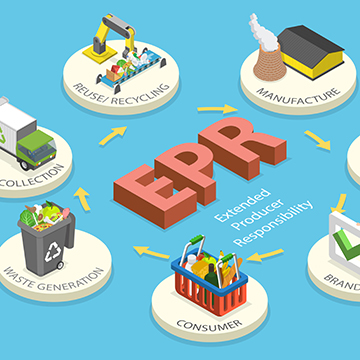
A CPG manufacturer’s guide to Extended Producer Responsibility (EPR) packaging laws across seven US states, including compliance steps, fees, and reporting.